
The idea of copy trading began to gain momentum towards the end of the 2000s, when the online trading platforms developed an opportunity to duplicate the trades performed by experienced traders. Up until then, the majority of retail traders were using trading signals, advisory services, or simply manual trading while paying unknown fees without being aware of the true trading costs.
Copy trading has become more advanced over time. Today's modern software and platforms make copying of professional traders' strategies easy with only a couple of clicks. However, many traders overlook one crucial detail: the cost of the trade.
Learning about the cost per order is crucial since the expenses of the trade significantly influence the profitability of it. Be it an application for copy trading, a trade copier that works via the broker, or an API copy trading platform, learning how the costs work can prove beneficial for you.
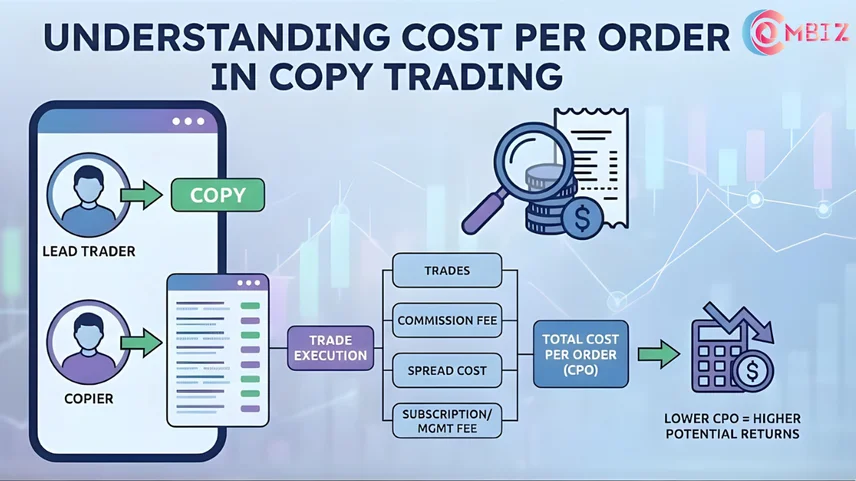
The term 'cost per order' in copy trading refers to all expenses associated with executing a copied trade in your trading account. The cost of your trade changes based on three factors: the trader you select, the trading platform you choose and the current market conditions.
Copy trading requires users to pay multiple fees, which include performance-based charges and platform costs and execution expenses, while manual trading only requires users to pay broking fees or commissions. Your actual profit from the investment will be determined by these factors.
A modern copy trading platform consists of several technical components working together to ensure accurate and rapid trade replication.
1. Master Account
2. Child or Follower Accounts
3. Trade Copier Engine
The trade copier engine is the core component of any copy trading system.
Its role is to:
The speed and accuracy of this engine directly impact copy trading performance.
4. Broker API Integration
Broker APIs connect the copy trading software with trading accounts.
API integration allows:
Popular Indian brokers such as Zerodha, Angel One, Dhan, Upstox, and Fyers support API-based trading.
5. Risk Management Module
Risk management is one of the most important components of a copy trading platform.
It helps traders:
Without proper risk management, even profitable strategies can become dangerous.
6. Reporting and Analytics Dashboard
Advanced copy trading platforms provide detailed analytics, including:
These insights help traders evaluate strategies more effectively.
A professional copy trading system relies on several backend technologies.
Signal Generation Module
Generates trading signals from the master account.
Order Execution Engine
Processes trade signals and sends orders to connected broker accounts.
API Bridge
Acts as a communication channel between trading software and brokers.
Position synchronisation
Ensures follower accounts maintain the same positions as the master account.
Latency Management
Reduces execution delays and minimises slippage.
Error Handling System
Detects connection failures and execution issues to ensure stability.
The profitability of a trading strategy decreases when traders overlook the associated trading expenses. The smart copy traders of this system treat their trading expenses as elements which they must handle through their risk assessment process.
1. Transparency Is Key
The copy trading software selection process requires users to select software which provides them with:
Combiz operates as a platform which enables users to see their actual order costs through its transparent system that shows them costs before and after order execution.
2. Diversify Your Copy Trading Portfolio
Instead of copying a single trader:
Diversification helps balance both risk and cost impact.
3. Use Stop-Loss and Risk Limits
The implementation of risk controls needs to follow these exact rules:
The controls establish loss limits which remain active during periods of market instability when prices increase.
4. Analyse Trader Metrics Carefully
Traders should not receive their complete assessment based on their ability to generate high profits. The assessment should emphasise these three aspects:
The combination of reduced drawdown and consistent performance leads to decreased total operating expenses for the business.
The ideal copy trading platform should include:
Newer types of copying platforms like Combiz will help traders make decisions based on data through the use of an automated tool that combines transparency, smart principles, and risk management.
Combiz Services Pvt Ltd offers advanced copy trading software designed for modern traders.
Key features include the following:
These features help traders automate execution while maintaining control over risk and costs.
Understanding cost per order is essential for anyone involved in copy trading. However, successful copy trading is not only about costs—it also depends on the technical components and architecture that power the entire system.
The best copy trading platform will feature transparency, good risk management, broker API connection, and fast order processing. Understanding of how it all works allows one to make better decisions.
Copy trading requires making profits but also understanding the way they are made.
1. What are the components of a copy trading platform?
The main components include master accounts, follower accounts, trade copier engines, broker APIs, risk management modules, and reporting dashboards.
2. What is cost per order in copy trading?
Cost per order is the total expense associated with executing a copied trade, including commissions, spreads, performance fees, and other charges.
3. Why are APIs important in copy trading?
APIs enable real-time communication between brokers and copy trading software, ensuring fast and accurate trade execution.
4. How does a copy trading platform work?
The platform receives signals from a master trader and automatically replicates those trades across follower accounts using broker APIs.
5. How can I reduce copy trading costs?
Choose transparent platforms, monitor trading frequency, diversify strategies, and use proper risk management techniques.